


A Chicago CME connectivity VPS positions algorithmic futures traders near CME servers for direct market access, reducing latency-driven slippage during execution. TradingFXVPS low-latency Forex VPS hosting delivers this connectivity, supporting NinjaTrader, TradeStation, and custom EAs with dependable uptime. Prop firm traders and quants running automated strategies gain premium network stability plus 24/7 US-based technical support.
Key Takeaways
- TradingFXVPS Chicago infrastructure delivers 0.52ms latency for CME futures trading with direct market access.
- Our 99.99% uptime guarantee ensures uninterrupted trading execution across all market conditions and trading hours.
- AMD Ryzen hardware with DDR5 RAM and NVMe storage powers lightning-fast order processing for futures traders.
- Aurora, Illinois data center location positions traders 35 miles from CME’s matching engine for optimal connectivity.
Where Does CME Actually Match Your Trades?
CME’s matching engine sits inside a 428,000-square-foot data center in Aurora, Illinois, roughly 35 miles west of the Loop. Every E-mini S&P 500 contract and crude oil trade on the exchange matches at that single facility, not in a downtown Chicago tower. That distinction matters for anyone running automated futures strategies where microseconds decide fill quality.
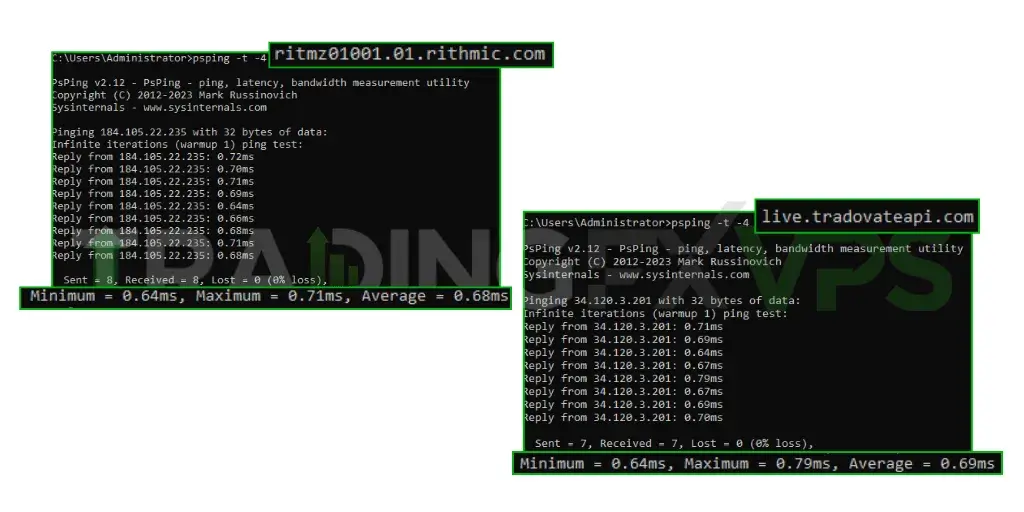
Traders lose execution edge the moment their infrastructure sits too far from that Aurora facility. A properly configured CME Aurora low latency trading server closes that gap, delivering latency as low as 0.52ms to CME’s matching infrastructure. Managed servers running NinjaTrader, TradeStation, Sierra Chart, or Bookmap on this kind of CME Aurora low latency trading server typically achieve 0-1ms round-trip speeds from Chicago to the exchange. Traders connecting through Tradovate or Rithmic see comparable results, with measured latency around 0.70ms on this same infrastructure.
Why does an Aurora, Illinois location matter for CME latency?
Aurora houses the physical matching engine, so proximity there outweighs proximity to downtown Chicago, which is exactly why an Aurora low latency VPS is the right infrastructure choice over a generic downtown server. An CME Aurora low latency trading server setup shortens the physical and network path a trade order travels before matching occurs. For high-frequency and algorithmic strategies, that shorter path reduces slippage risk on every fill.
TradingFXVPS embeds its infrastructure within major financial centers, including the Chicago corridor, built specifically around uninterrupted, fast trade execution. This positioning gives prop firm traders and EA operators a direct route to CME without relocating operations themselves.
What Makes Chicago VPS Fast For CME?
Speed near the Chicago Mercantile Exchange comes from three factors: isolated hardware, dedicated bandwidth, and a network stripped of non-trading traffic. A chicago forex vps built for futures traders pairs direct market access with 24/7 technical support. Execution stays consistent through volatile sessions. That combination matters most during high-volume opens, when shared infrastructure tends to buckle under load.
Dedicated CPU core plans remove that risk entirely. No client shares processing power, memory, or storage with another account; every resource stays isolated and reserved. Automated strategies running on NinjaTrader or TradeStation depend on that isolation to avoid latency spikes caused by a neighbor’s workload.
Why does network capacity matter for CME connectivity?
Bandwidth determines how fast order data moves during redundant Chicago routing, with capacity reaching up to 10 Gbps. A CME Aurora low latency trading server built on that capacity handles large backfills and rapid order bursts without bottlenecking.
Does hosting other applications slow down a trading VPS?
Yes. Networks that host media or unrelated applications introduce instability that trading systems cannot absorb. Chicago-focused hosting restricts servers strictly to traders and financial applications, preserving stability for latency-sensitive execution.
An CME Aurora low latency trading server environment ties these elements together. Lower latency to the broker means faster execution, and faster execution means capturing market moves before they disappear.
How Should Chicago Traders Choose A VPS?
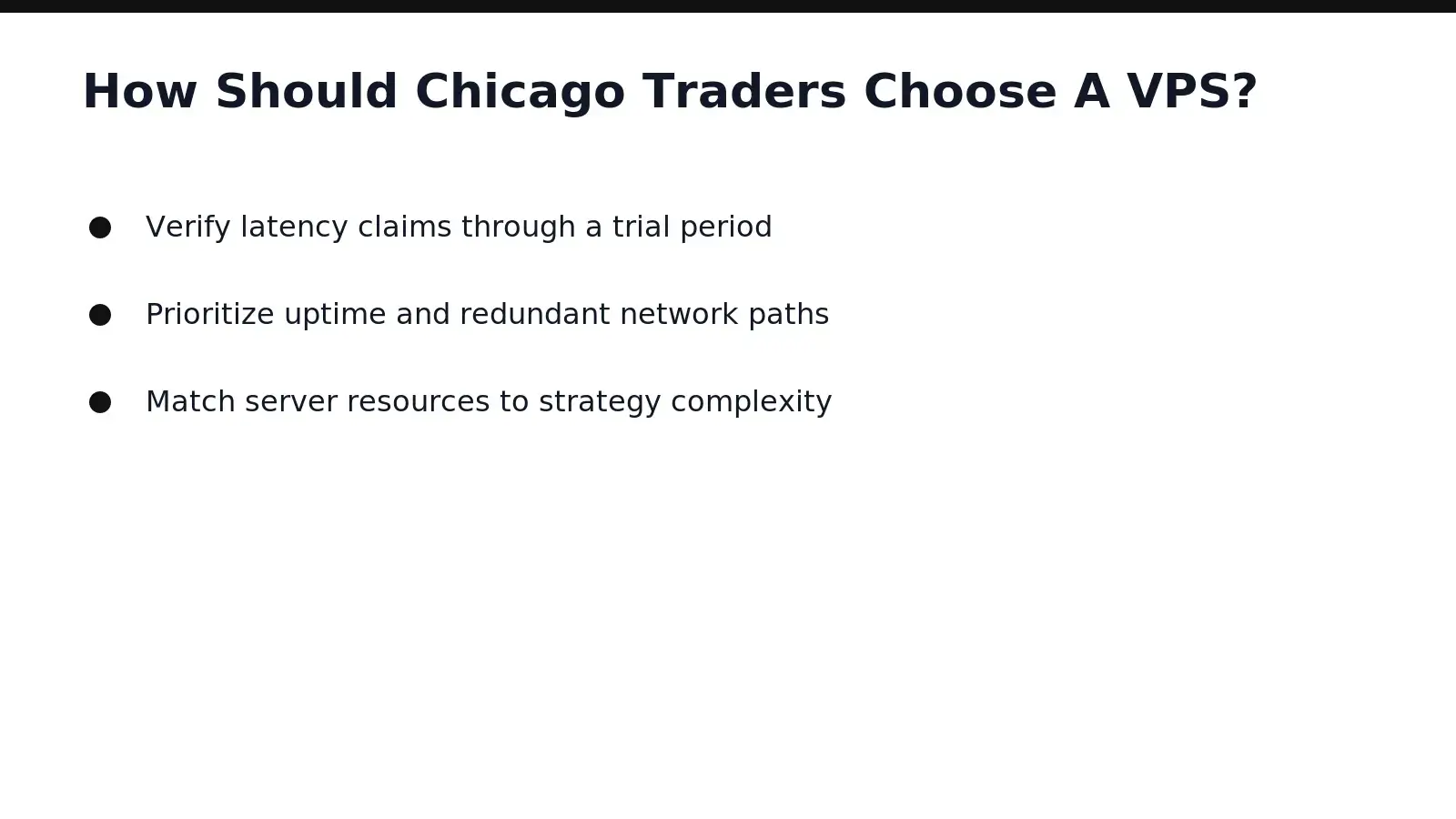
Selection comes down to three factors: measured latency to CME, network reliability, and the ability to test before paying full price. Algorithmic traders running NinjaTrader or custom EAs on E-mini. Crude oil contracts cannot afford guesswork on any of these fronts. A CME Aurora low latency trading server built specifically for latency-sensitive execution reduces the gap between signal and fill, which directly affects slippage on fast-moving futures.
Lower latency to the broker translates into more profitable trading outcomes overall. Every extra millisecond between order placement and exchange match works against strategies that depend on speed. TradingFXVPS designs its infrastructure around this reality, prioritizing speed, stability, and security for traders who cannot tolerate connection drops or unpredictable execution.
What Should A Trader Test Before Committing?
Trial plans exist precisely for this reason. Traders can run live strategies on CME Aurora low latency trading server infrastructure and observe execution quality before signing a long-term contract.
Does Network Quality Matter As Much As Server Speed?
Yes. Premium network connectivity supports uninterrupted, 24/7 trading operations, which matters for automated systems that never sleep. Combined with CME Aurora low latency trading server routing, this connectivity keeps orders moving without disruption during high-volume sessions.
- Verify latency claims through a trial period
- Prioritize uptime and redundant network paths
- Match server resources to strategy complexity
Conclusion
In closing, Chicago-based VPS infrastructure represents a critical advantage for traders requiring direct CME connectivity and ultra-low latency execution. The combination of strategically positioned data centers, advanced hardware architecture, and unwavering uptime guarantees establishes the foundation for reliable, high-performance trading operations. Traders seeking to optimize their automated strategies benefit from infrastructure engineered specifically for the demands of modern financial markets, where milliseconds determine competitive advantage and execution quality.